
Chemical Characterization Across the Pulp and Paper Process
The Chemical Analysis Laboratory provides chemical characterization of biomass, pulping liquors, recovery streams, deposits, paper contaminants, and pulping byproducts across the pulp and paper process.
A central focus of the laboratory is black liquor and pulping liquor analysis, which mills rely on to monitor recovery chemistry and process conditions.
Biomass Characterization
Understanding feedstock composition is an important first step in pulping and biomass utilization. The laboratory supports chemical characterization of biomass materials used in research and industrial studies.
Capabilities include:
- Klason lignin
- Hemicellulose
- Extractives
- Sugar profile
- Holocellulose
Equipment includes:
- High Performance Anion Exchange Chromatograph with Pulsed Amperometric Detector
Black Liquor Analysis
Black liquor analysis is one of the laboratory’s core capabilities. These measurements help mills monitor recovery chemistry and better understand one of the most important streams in the pulping process.
Capabilities include:
- Anion determination using capillary electrophoresis
- SO₄²⁻
- SO₃²⁻
- S₂O₃²⁻
- Cl⁻
- Formate
- Acetate
- Propanoate
- Butyrate
- Oxalate
- Element determination using inductively coupled plasma optical emission spectrometry (ICP-OES)
- Carbon content determination using Coulometric Titrator
- Inorganic carbon
- Organic carbon
- Total carbon
- Heating value determination using adiabatic oxygen bomb calorimeter
- Residual effective alkali (REA) and residual sulfide determination using Mettler Toledo Titrator
- Sulfate ash analysis
- Crude tall oil content
- Crude sulfate turpentine content (CST)
- Fiber content
- Carbohydrates degradation products with GC/MS
- Lignin degradation products with GC/MS
Equipment includes:
- Capillary Ion Electrophoresis (CIE), Agilent 7100
- ICP-OES (Perkin Elmer Optima 7300DV and AVIO 200 Max)
- Coulometric Titration System
- Toledo Titrator (Not pictured below)
- GC/MS System with Head-Space Injector (5973 MSD/G1888 Headspace Sampler)
Green and White Liquor Analysis
The laboratory also supports analysis of green and white liquors used in kraft pulping and recovery operations.
Capabilities include:
- · Anion analysis
- SO₄²⁻
- SO₃²⁻
- S₂O₃²
- Cl⁻
- Alkali analysis
- NaOH
- Na₂S
- Na₂CO₃
- Reduction efficiency
- Lime index
- Inorganic elements
- ABC titration for EA, AA, TTA, and sulfidity
Equipment includes:
- Capillary Ion Electrophoresis (CIE), Agilent 7100
- Auto Titrator (Not pictured below)
- ICP-OES (Perkin Elmer Optima 7300DV and AVIO 200 Max)
Deposit Composition Analysis
Deposits formed across pulping, bleaching, recovery, and papermaking systems can affect equipment performance and process stability. The laboratory supports compositional analysis to help identify what those deposits are and where they may be coming from.
Equipment includes:
- FTIR Spectrometer / Microscopes
- GC/MS System with Head-Space Injector (5973 MSD/G1888 Headspace Sampler)
- ICP-OES (Perkin Elmer Optima 7300DV and AVIO 200 Max)
- Capillary Ion Electrophoresis (CIE), Agilent 7100
- Coulometric Titration System
Deposits may include those from:
- Alkali recovery system
- Pulping and bleaching process
- Paper machine
Paper Contaminant Analysis
The laboratory also supports chemical analysis of contaminants found in paper sheets, helping identify composition and possible sources.
Equipment includes:
- GC/MS System with Head-Space Injector (5973 MSD/G1888 Headspace Sampler)
- FTIR Spectrometer / Microscopes
- ICP-OES (Perkin Elmer Optima 7300DV and AVIO 200 Max)
Our Equipment
Together, these capabilities support chemical characterization across the pulp and paper process—from biomass composition and pulping chemistry to recovery streams, deposits, contaminants, and byproduct analysis. Please see our listing of specific capabilities and tests below and contact us about your project needs.
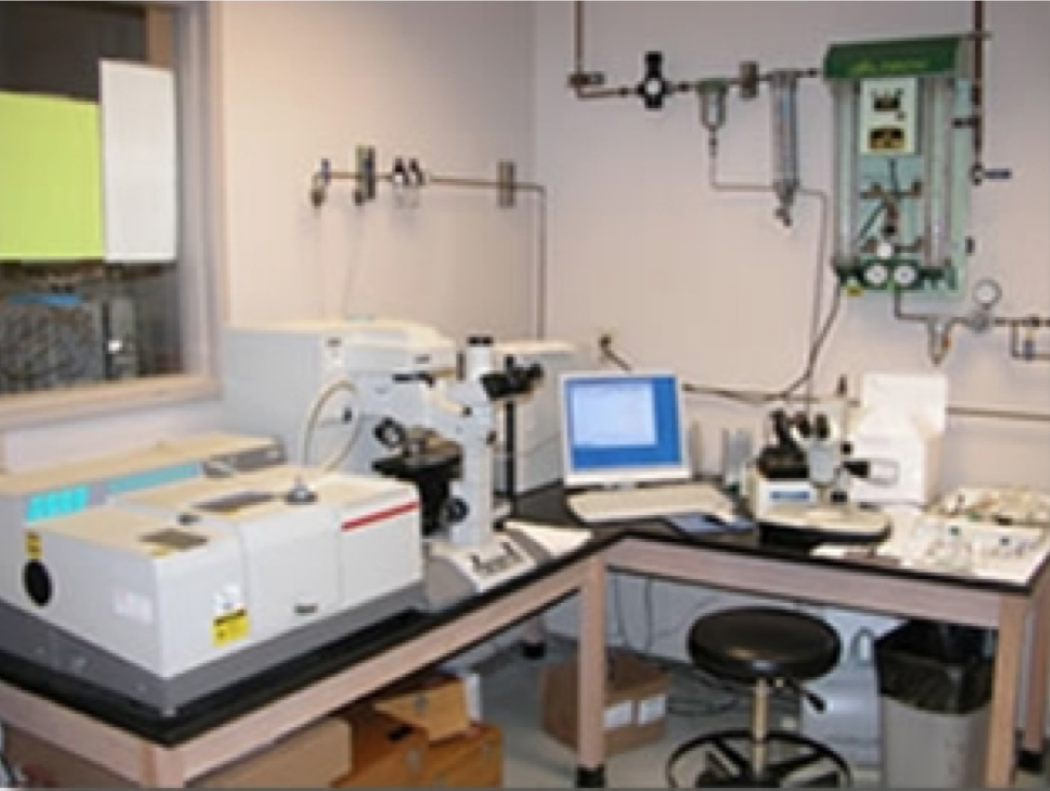
FTIR Spectrometer / Microscopes
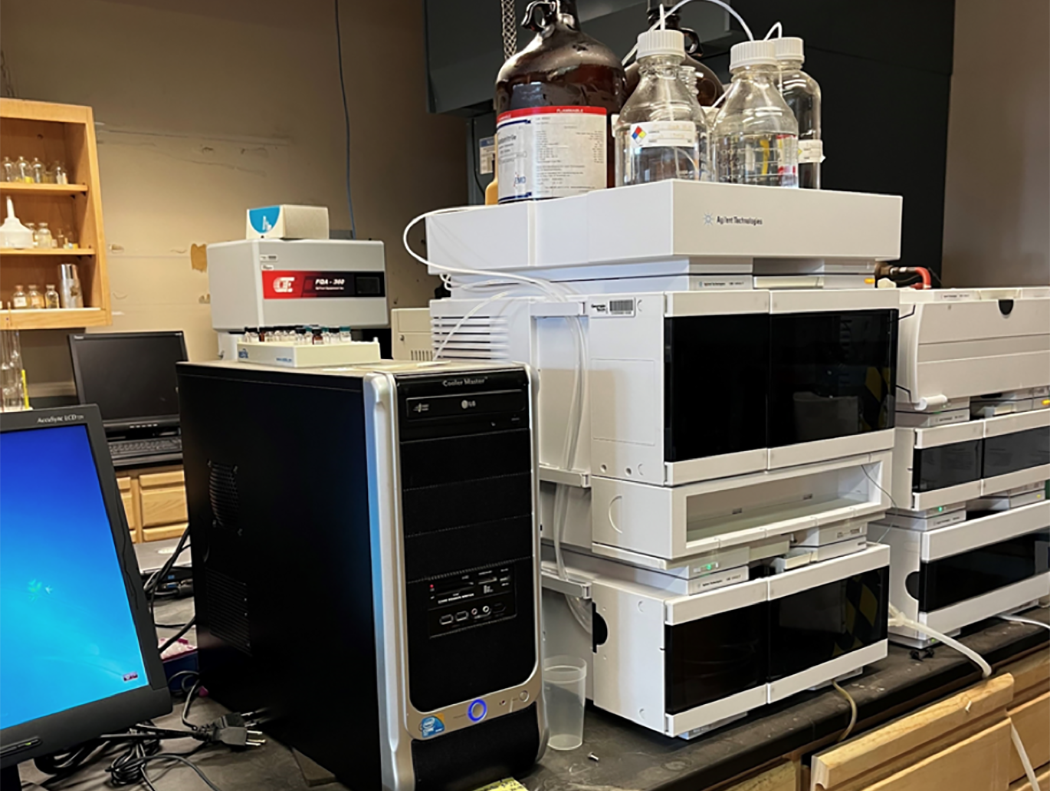
High Performance Liquid Chromatograph
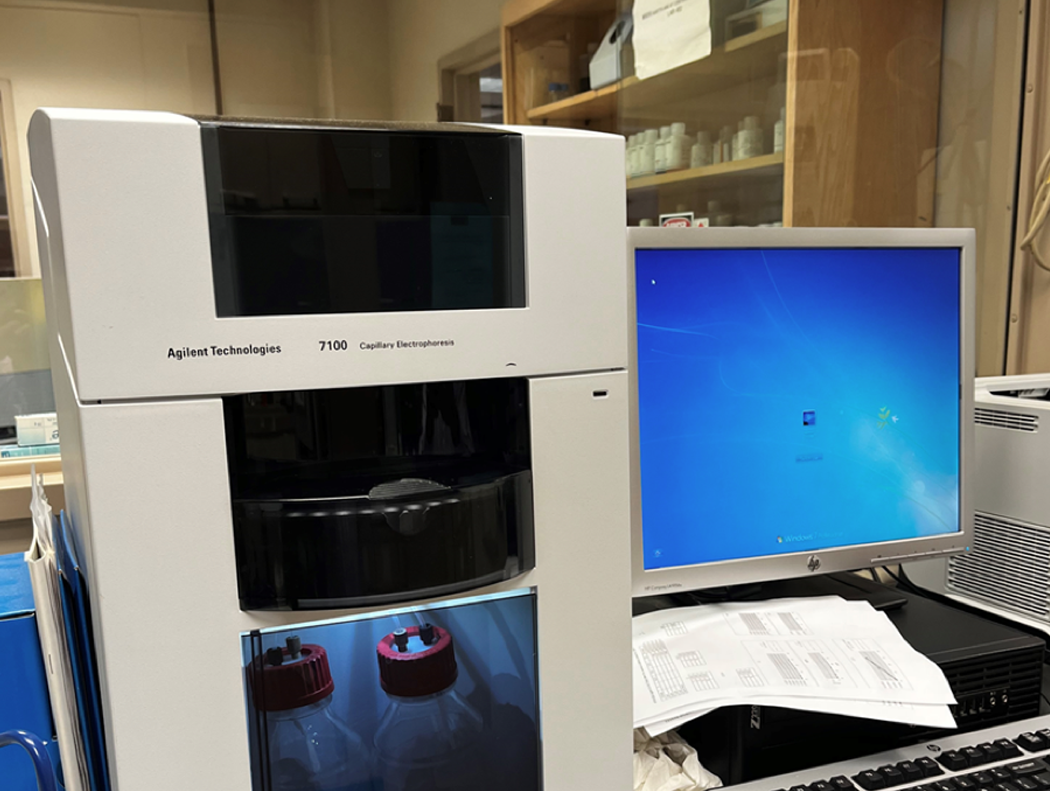
Capillary Ion Electrophoresis (CIE), Agilent 7100
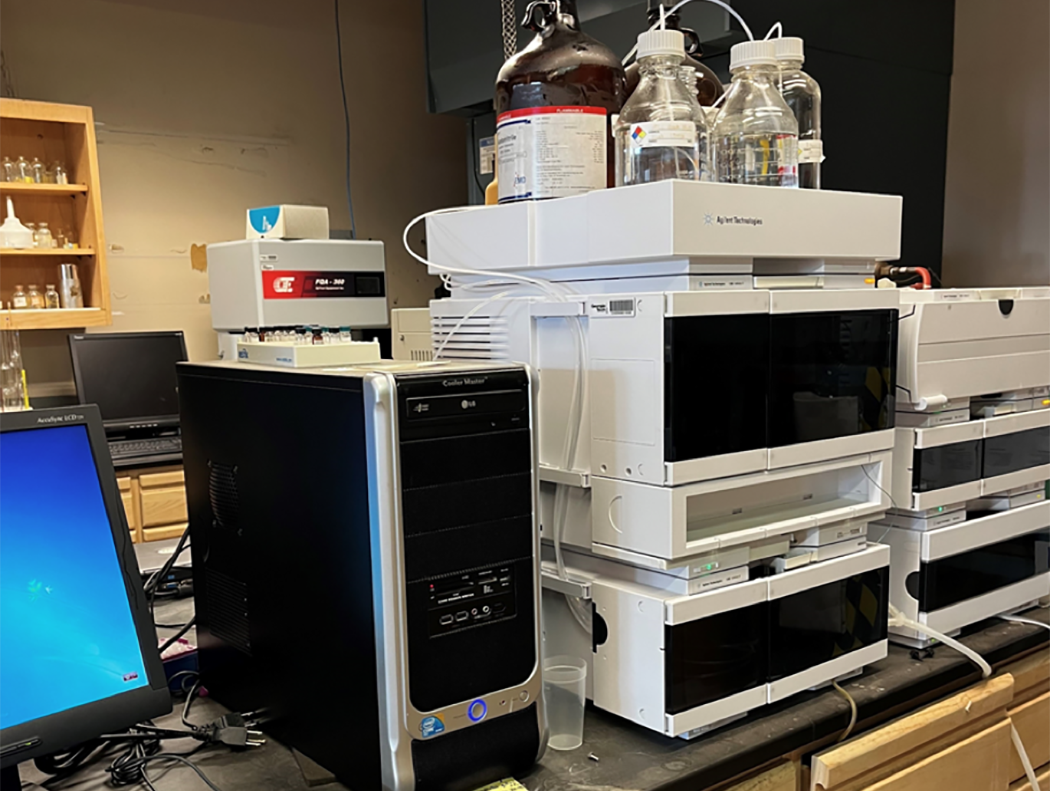
High Performance Anion Exchange Chromatograph with Pulsed Amperometric Detector
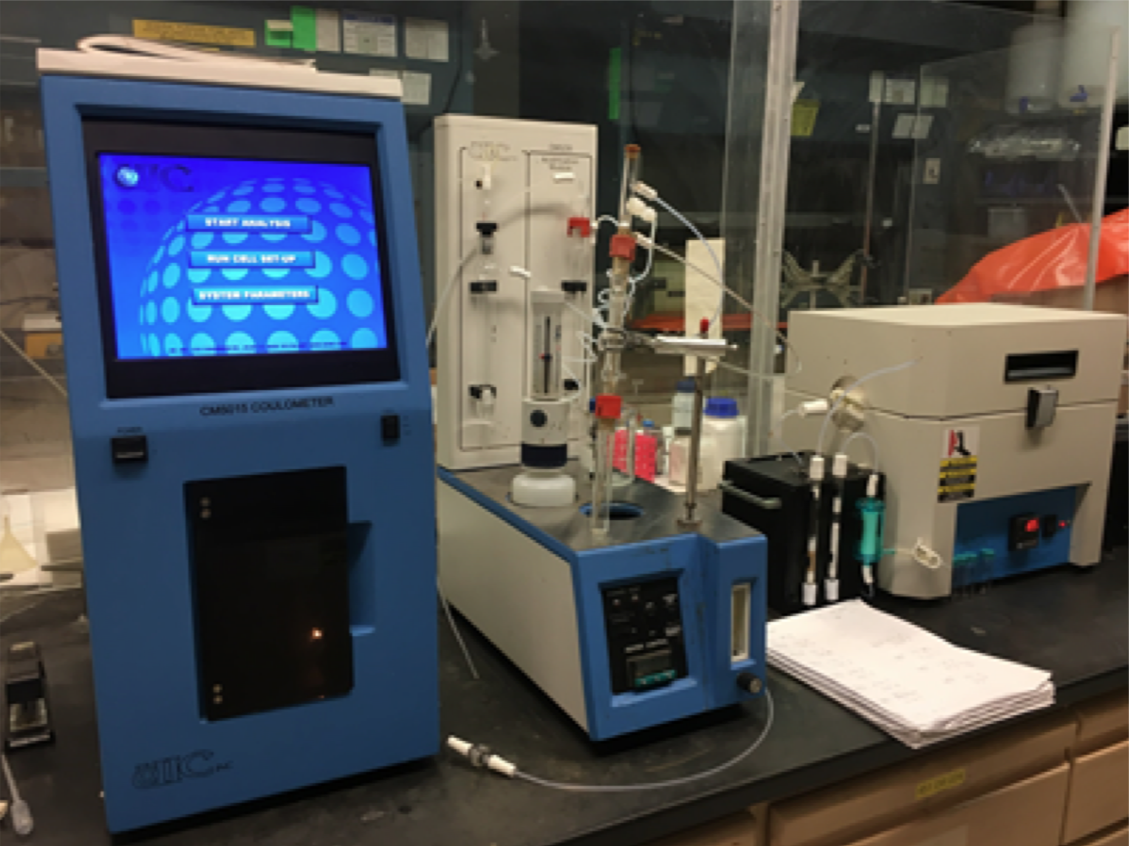
Coulometric Titration System
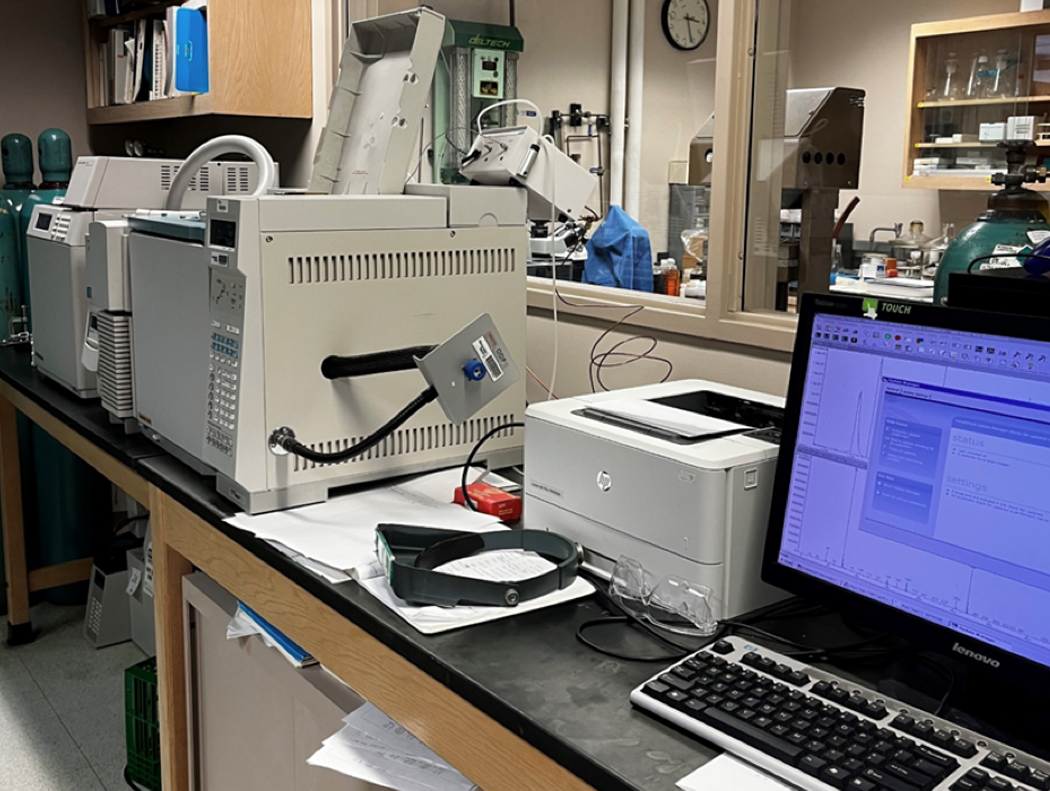
GC/MS System with Head-Space Injector (5973 MSD/G1888 Headspace Sampler)
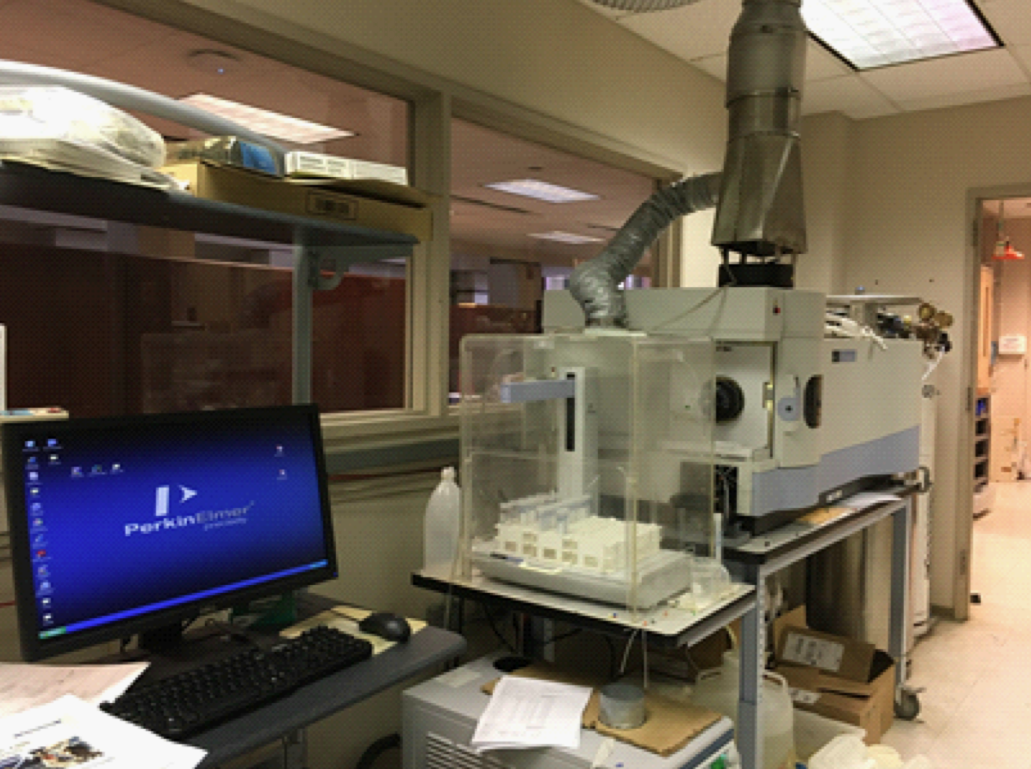
ICP-OES (Perkin Elmer Optima 7300DV and AVIO 200 Max)
Contacts
Rallming Yang
Senior Research Scientist,
Manager, Pulping and Chemical Analytical Lab
Renewable Bioproducts Institute
rallming.yang@rbi.gatech.edu
(404) 894-7862
Chris Luettgen
Professor of the Practice
Renewable Bioproducts Institute
chris.luettgen@rbi.gatech.edu
(404) 894-6908
To Request Testing
- Send e-mail to rallming.yang@rbi.gatech.edu with details regarding the nature of the request, the tests required and the problem or issue that is to be resolved. Provide billing contact name and address.
- Samples via courier (UPS, FedEx, DHL, etc.) may be sent to the attention of:
Rallming Yang
RBI at Georgia Tech
500 10th St. NW Atlanta, GA 30318-5794
If sending by U.S. mail replace, the ZIP code with 30332-0620 - A Purchase Order for an amount to cover the costs for the requested testing is required.
Georgia Institute of Technology
Bursar’s Office/ A/C Receivables
225 North Avenue NW Lyman Hall Suite #111
Atlanta, GA 30332-0257
A copy of the Purchase Order sent via fax to 404-894-4778 is requested. - The sender should have the name of the appropriate RBI contact and phone number on their invoices/P.O.s
- Receipt of samples coupled with e-mail detailing testing requirements, and any background information initiates the generation of an internal project and officially starts the project.
- The work request is queued with others in order of time of receipt of samples. Work requests may be expedited under special circumstances.
- A report will be issued within the agreed turnaround time.
- Bills are sent separately by mail through the GT accounting system.